Foot Health  |  Reader Story

If Your Back, Knees, and Hips Ache, the Cause Might Be Twelve Inches Lower Than You Think

For almost four years, every morning started the same way. Heel to the cold floor, then a pull across the arch, then the knee stiffening — and by the time I reached the kitchen counter, a low ache had already settled into my lower back.

I blamed my back. I blamed my mattress, my age, the concrete floors at work. I spent years — and a small fortune — treating everything above the problem.

Turns out I'd been treating the wrong floor of the house. The real problem was the foundation underneath — and the four things I tried below tell the story of how I finally found it.

The Floor Everyone Forgets to Check

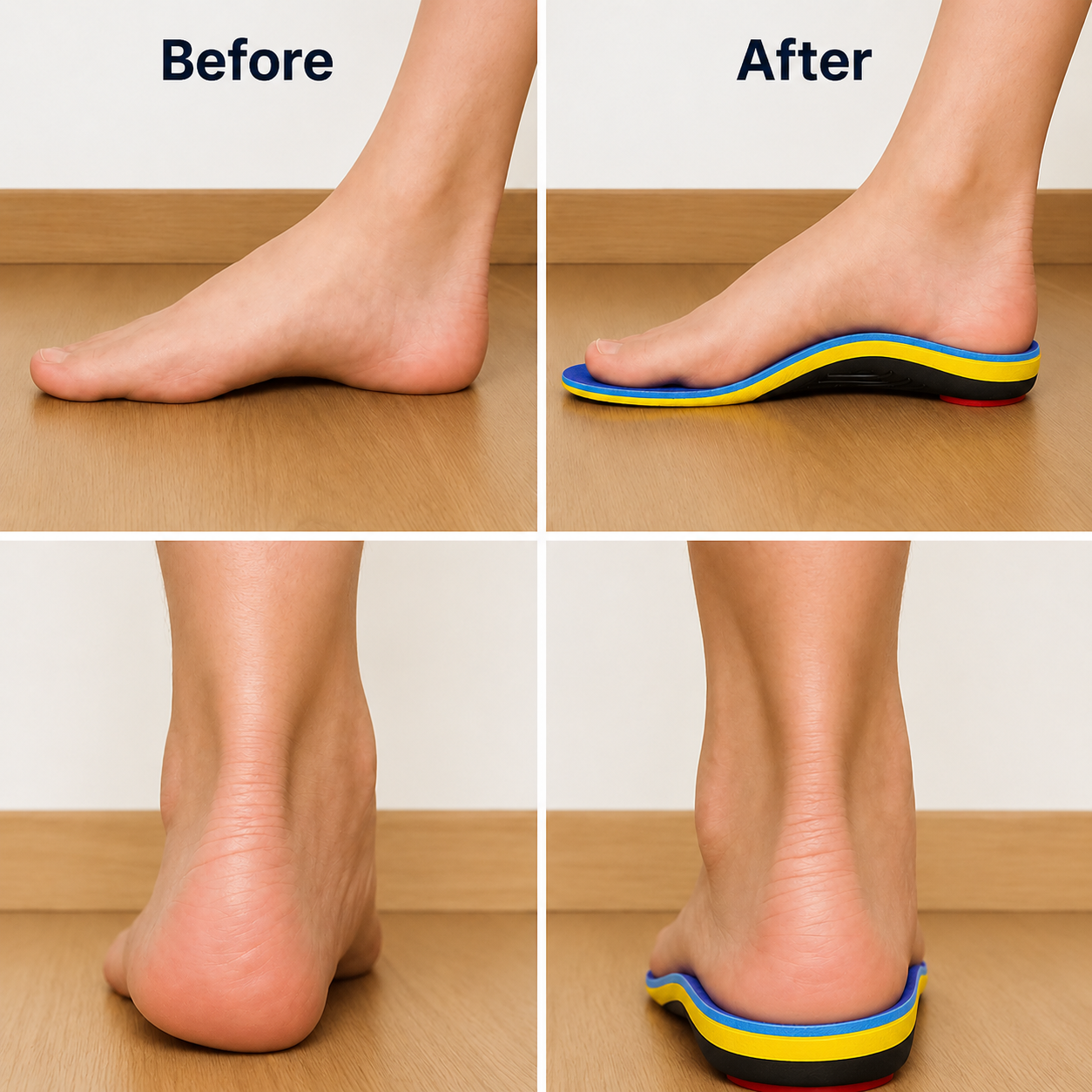
Here is what no one had explained to me. Your feet are the foundation everything above them is built on. When the arch collapses and the foot rolls inward, that base tilts — and the misalignment doesn't stay put. It travels straight up the chain.

The ankle rolls to compensate. The knee rotates to absorb it. The hip drops to level you out. And the lower back works overtime, all day, to keep you upright on a foundation that has quietly shifted. By the time the pain shows up, it is usually two or three floors above where it started.

When a house settles, the cracks show up in the walls and the door frames — not in the foundation that actually moved. Your body does the same thing. The pain shows up in the back and the knees. The shift happened at the feet.

That is why the back braces, the chiropractor visits, the new mattress, and the foot-only orthotics never fully held for me. Each one treated a floor above the problem. None of them re-leveled the foundation. So I went looking for the one thing that would — and tried everything below before I found it.

1. Dr. Scholl's Heavy Duty

Dr. Scholl's Heavy Duty insole — bent to show structure
Didn't Last for Me

Dr. Scholl's Heavy Duty (foam insoles from the drugstore)

I started with Dr. Scholl's Heavy Duty. The packaging said they're made for people on their feet all day, so it sounded like a fair start.

The first few hours felt fine — soft, comfortable. By the back half of my shift, the heel pain was back. The issue was the arch: there's almost no lift under the foot, even on the Heavy Duty version. Without a real arch holding my weight, the rest of the insole can't do much.

Pros

  • Cheap and easy to find
  • Comfortable when you first put them in

Cons

  • The arch is too low and too soft to help with conditions like plantar fasciitis or a flat foot
  • Acts as a short-term comfort fix, not something that treats the pain underneath

My take: Fine for short errands. Not enough for a twelve-hour shift.

2. PowerStep Pinnacle

PowerStep Pinnacle insole — foot standing on it
Didn't Last for Me

PowerStep Pinnacle (the one everyone recommends online)

After Dr. Scholl's didn't hold up, I tried PowerStep Pinnacle. People online recommend it everywhere — it costs more and gets praised for being better built.

The first two weeks felt great. Firmer arch, noticeably less pain at end of shift. Then by week three or four, the arch started sinking under my weight, and the heel pain came back. There's also almost no padding under the heel. For someone heavier or doing physical work, it isn't firm enough to stay up.

Pros

  • Better built than drugstore foam
  • Well-reviewed online

Cons

  • The arch isn't firm enough to hold its shape under weight, especially for heavier people or physical work
  • Very little cushion under the heel, so every hard step still hits the bone

My take: Better quality than drugstore. Still not enough for long shifts or physical work.

3. Custom Orthotics

Custom orthotic insole held by a podiatrist
Didn't Last for Me

Custom orthotics (ordered through a podiatrist)

After two pairs that didn't last, I went the medical route. Got a pair of custom orthotics through a podiatrist — molded specifically to my foot.

The arch was firm, the shape matched, and for the first time my heel pain was under control. But that's where it stopped. My lower back was still tight, my knees still ached on the drive home. When you stand twelve hours, the pain doesn't stay in your foot — it travels up into the knees and back. Orthotics support the foot. Nothing else.

Pros

  • Molded specifically to the shape of the foot
  • Real arch structure prescribed by a podiatrist

Cons

  • Only support the foot — no help for the back, knees, or hips that also ache after a long shift
  • Expensive, often rigid, and only fit one pair of shoes

My take: Good if foot pain is your only problem. Not enough if it travels up to your knees and back.

4. Comfort Step Pro Arch

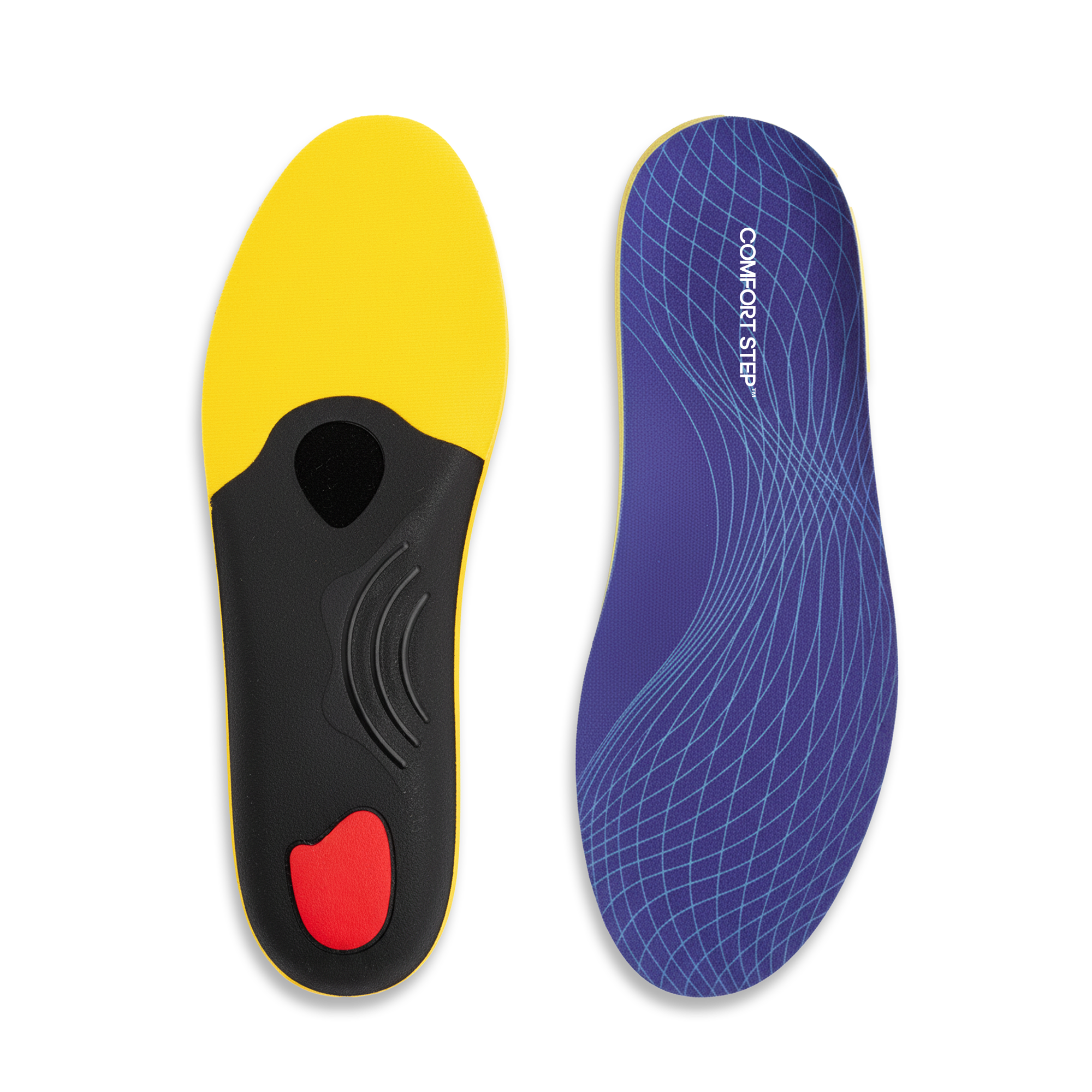
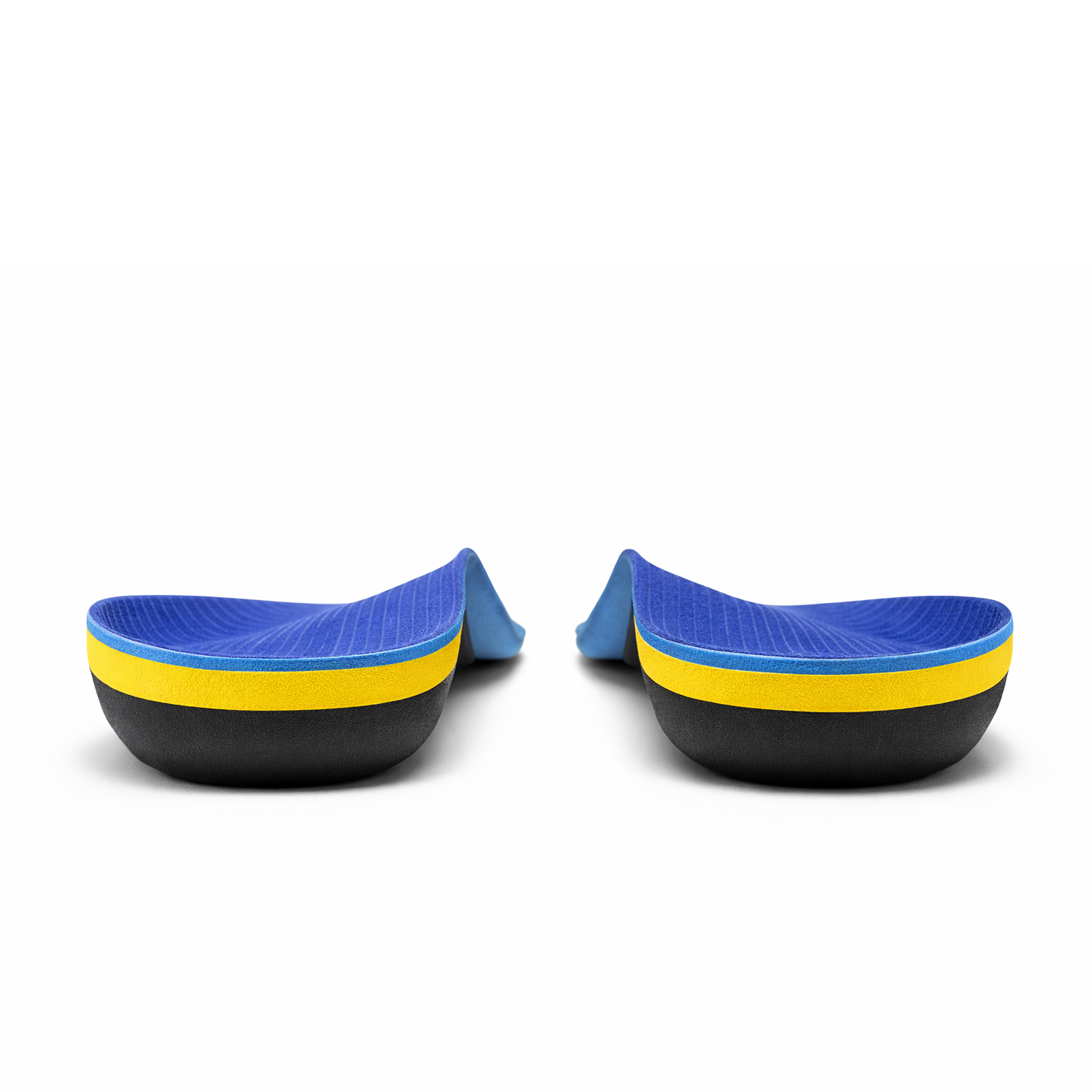
Comfort Step Pro Arch Insoles, top view, showing the four-zone build on a clean off-white background
Still Wearing These

Comfort Step Pro Arch (the pair I'm wearing right now)

After three pairs that didn't last, a friend mentioned Comfort Step Pro Arch — said his brother in security swears by them. I figured one more try wouldn't hurt.

Day one, the support felt different. Firm under the arch — like a real platform, not a soft pad. Might feel stiff for a short time if you're used to drugstore foam. Thirty days later, I'm still wearing the same pair, doing full shifts. The arch hasn't sunk once.

I got curious about why these felt different. Most insoles I'd tried only did one thing well — soft, firm, or shaped to the foot. These do all three at once. After a few weeks even my back and knees stopped aching. I think it's because the support runs through more than just the arch.

Pros

  • Firm arch that holds its shape long-term
  • Real cushioning at both the heel and forefoot
  • Supports the whole chain — feet, knees, hips, back
  • Built for heavy people and physical work (tested to 330 lbs)

Cons

  • Online-only for now — no retail stores yet (the brand says stores are coming)
  • The firm arch can feel stiff for a short time if you're used to soft foam

My take: Three pairs that didn't last in a year. One that has. That's the difference.

See How the Build Works →

How the Build Works

Here's why fixing the foundation relieves the whole chain — not just the foot. Four zones work together to re-level the base you stand on.

Whiteboard diagram showing how foot support affects back, hip, and knee pain — with arch support, deep heel cradle, shock absorption, and metatarsal pad labeled
How the build addresses pain that travels from the foot up.
1

Deep Heel Cup

A cup-shaped cradle holds the heel in place and absorbs the impact that hits the bone with every step.

2

Firm Midfoot Arch Lift

A firm platform under the arch that doesn't collapse under weight, taking pressure off the plantar fascia.

3

Cushioned Forefoot

A shock-absorbing layer where the push-off lands, so the ball of the foot isn't taking a hard impact every step.

4

Anti-Roll Heel Lock

A built-in lock that stops the foot from rolling inward, which keeps the ankles, knees, and hips lined up over a long shift.

See the Reader Rate ›

Proof From People Who Stand All Day

Short videos from real customers who put Comfort Step through long shifts.

Real customer #1
Real customer #2
Real customer #3
Real customer #4
Real customer #5

Turns Out I'm Not the Only One

Here's what the brand reports.

127,000+
Americans wearing them
96%
Satisfaction rate
89%
Report relief in the first week
1,200+
U.S. podiatrists recommend them

The Podiatrist Who Engineered It

Dr. Elliott Marchand, DPM, in a white clinical coat
Dr. Elliott Marchand, DPM
24 years clinical practice
Designer, Comfort Step Pro Arch

Comfort Step Pro Arch was engineered by Dr. Elliott Marchand, DPM — a podiatrist with 24 years of clinical practice. His team designed the four-zone build to address what he saw as the biggest gap in over-the-counter insoles.

"Most over-the-counter insoles I see in clinic are either too soft to support a collapsed arch or too rigid to cushion the impact a long shift creates. We engineered Comfort Step Pro Arch to do both at the same time."

— Dr. Elliott Marchand, DPM
A pair of Comfort Step Pro Arch Insoles next to a pair of work sneakers

Reader Offer

37% Off the Pair That Held Up

If you're sick of replacing insoles that don't last, here's where to grab them.

$79.95 $49.95 37% Off

Free US shipping on orders $89+.

Check Availability ›
30-Day Relief Promise
Free US Shipping $89+

30-Day Relief Promise

The brand offers a full 30-day money-back guarantee — no fees, no questions. After what I went through with the other three pairs, having that backstop mattered to me.

Other Reviews That Matched Mine

I went looking to see if other people had the same experience. Here are three reviews that lined up with what I felt.

Jennifer L., mom of three from Ohio

Jennifer L., 49

Mom of three · Ohio

"First pain-free walk in 3 years. I'd tried six other pairs of insoles before these. None of them worked. These actually do."

Verified Buyer

Robert T., retired engineer from North Carolina

Robert T., 58

Retired engineer · North Carolina

"My sciatica is finally gone. Five weeks in, the flare-ups stopped. I haven't slept through the night like this in over a year."

Verified Buyer

Maria S., ER nurse and recreational runner

Maria S., 41

ER nurse / Recreational runner

"Back to running 10ks pain-free. Did a 10k with zero hip pain after about 8 weeks of wearing them on shifts."

Verified Buyer

Reader Questions, Answered

Can insoles really help back, knee, or hip pain?

When the arch collapses, the misalignment travels up the chain, so the joints above it compensate all day. Supporting the arch and stopping the heel from rolling helps the whole chain line back up. It is designed to support and relieve — it is not a cure, and results vary from person to person.

How long do they last?

Lab-tested for 12+ months under 330 lbs without losing arch height.

Will they fit my work boots?

They use a trim-to-fit design and work in most shoe types — boots, sneakers, dress shoes.

Are they sold in stores?

Not yet — they're online-only for now. The brand says retail is coming.

Will they feel firm at first?

If you're coming off soft drugstore foam or pillowy medical insoles, the firm arch can feel stiff for a short time. That firmness is the support working, not a flaw.

Do they help with plantar fasciitis?

The firm midfoot lift is designed to take pressure off the plantar fascia, which is the main pain pattern in plantar fasciitis.

What's the return policy?

A full 30-day money-back guarantee. No fees, no forms.

Do they work for flat feet?

Yes. The firm arch is built specifically for collapsed arches that need real support, not just cushion.

How much weight can they support?

Lab-tested to 330 lbs / 150 kg for over 12 months without losing arch shape.

How fast is shipping?

Free US shipping on orders $89+. Standard delivery is 5–8 business days, tracked.

A clean pair of Comfort Step Pro Arch Insoles on a soft cream backdrop

Bottom Line

For years I treated the floors above the problem — the back, the knees, the hips. Nothing held, because the foundation underneath was still shifting.

Supporting the arch was the first thing that let the whole chain settle. Thirty days in, the morning ache I'd lived with for four years is just… quieter than it has been in a long time.

If your pain travels the way mine did, it's worth checking the one floor you probably haven't.

Check Availability ›