The Hidden Insole Truth: 5 Reasons Most Insoles May Be Making Your Feet Weaker
If you rely on arch-support insoles — and you've ever wondered why your feet feel worse on the days you skip them — read this short article right now before you put another pair in your shoes.
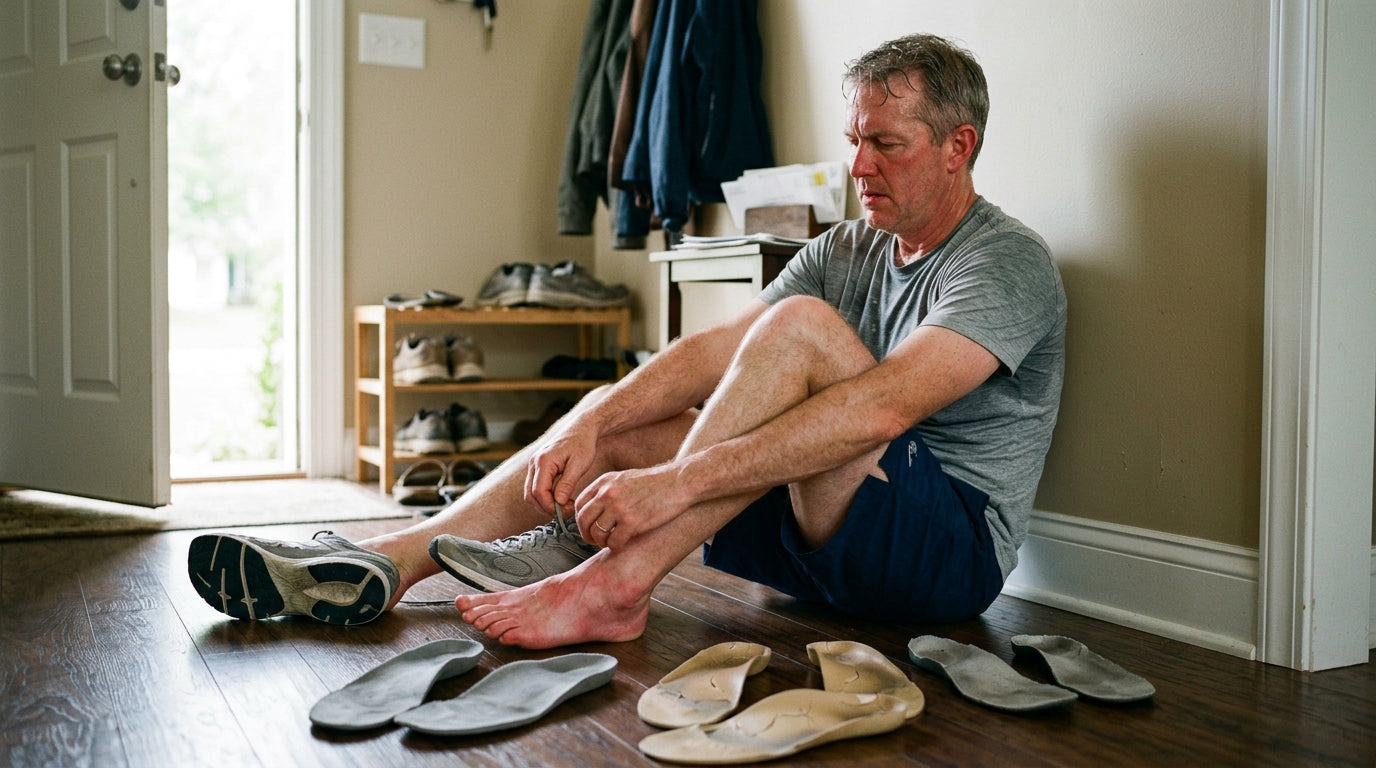
You put insoles in your shoes to help your feet — so here's the part nobody warns you about: a lot of them may be doing the opposite. Not on day one. But slowly, over months, the wrong insole can leave your feet weaker than when you started — which is exactly why they ache more on the days you go without them. Here are the 5 reasons it happens, and what to look for instead.
1They're Too Stiff — a Hard Arch Shelf Locks Your Foot Down
A healthy arch isn't a fixed dome. It's a spring.
When you take a step, your arch is supposed to flatten slightly under load, then rebound — absorbing impact and generating propulsion the way a compressed spring releases energy. That cycle, repeated thousands of times a day, is what keeps the intrinsic muscles of your foot active, strong, and responsive.
Most insoles don't work with that spring. They prop it at one fixed height and hold it there.
The arch stops deforming under load because the insole won't let it. The rebound cycle — the load, the flatten, the spring back — is bypassed entirely. The muscles that normally drive that cycle don't get the signal to fire.
Over weeks and months of all-day wear, those muscles adapt to their new job description: nothing. The arch becomes increasingly dependent on the structure underneath it because the structure is doing all the work.
Remove the insole on a rest day, and the arch that once had tone and recoil now meets the floor unprepared. That harder, more fatigued feeling? That's what passive support produces when it stops.
2They're Built for a Foot Standing Still — Not One That's Moving
Here's a mechanical problem most insole shoppers never think about: when does the support actually engage?
With a rigid arch insert, the support height is determined by the insole's fixed geometry. Your arch rests against the raised platform whether you're standing still or mid-stride. The insole cannot sense how much load is hitting your foot at any given moment. It can't adjust.
The problem is that your foot's support needs are highest at the peak of the loading phase — when your full body weight is transferring through a single foot. That's the moment the arch most needs dynamic help.
A static insert delivers the same support at rest that it delivers under load. Which means it's either over-supporting you when your foot needs minimal help, or under-supporting you at the exact moment of peak demand. Usually both, depending on your gait.
Real support should be load-responsive. It should meet your foot where the demand is, not at a fixed position that ignores it.
There's an insole built to support your foot only when it's under load — and stay out of the way the rest of the time.
See how it works ›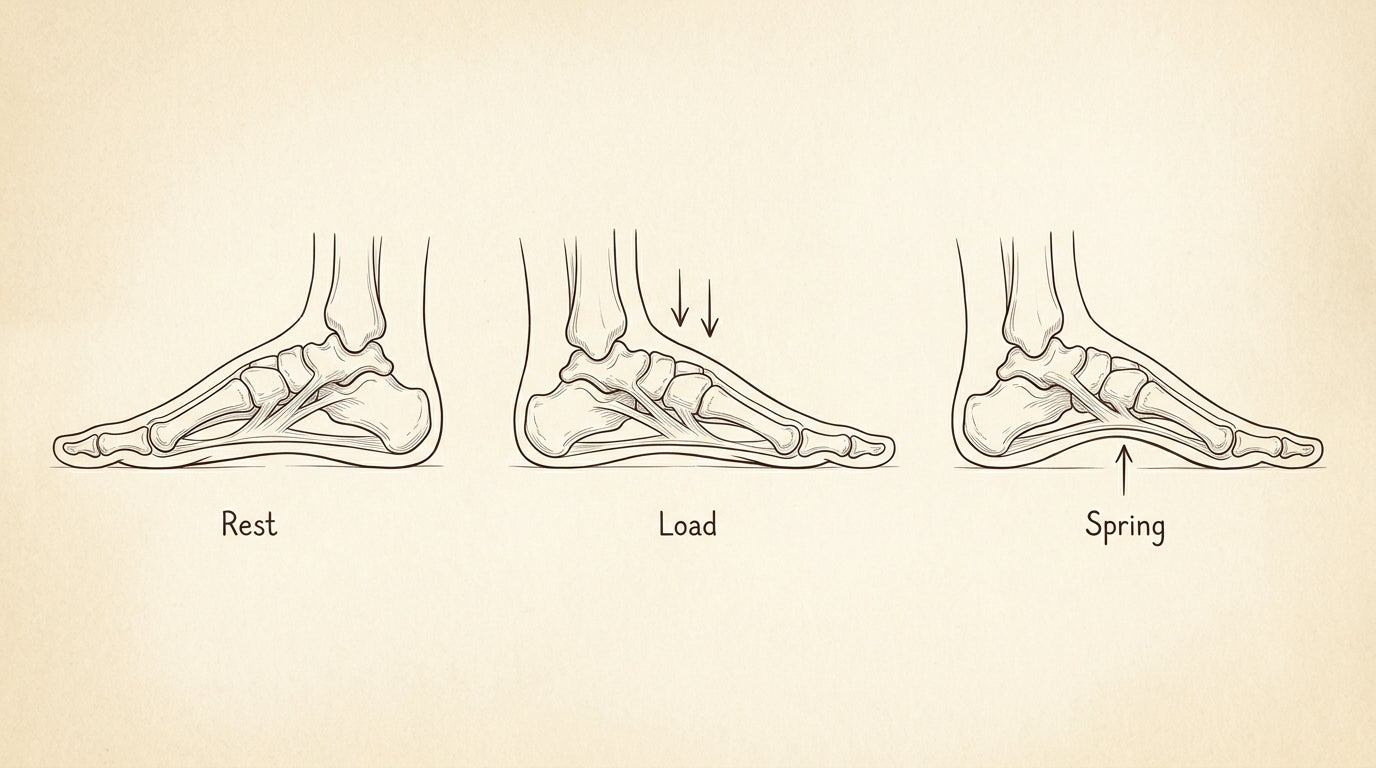
3They Prop Your Arch Up All Day — So It Forgets How to Hold Itself
There's a term physical therapists use: disuse atrophy. It means that when a muscle isn't called on to do work, it stops maintaining the capacity to do that work.
Your foot contains 29 muscles. The intrinsic group — the ones that live inside the foot itself — are responsible for arch control, toe articulation, and the fine stabilization that makes every step you take something other than a controlled collapse.
Those muscles need load stimulus to stay strong. They need to be challenged, repeatedly, with the weight of your body and the variance of terrain. That challenge is what keeps them recruited.
When a rigid insole takes over arch-support duties completely, the intrinsic muscles get an extended vacation. No arch-control signal needed. No stabilization work required. The insole handles it.
The foot is along for the ride.
After months of full-time insole wear with zero barefoot or minimal-shoe time, many people discover they've drifted into a dependency they didn't intend. The foot that gets out of the insole is a weaker foot than the one that went in — because it spent that time as a passenger.
4They're Too Soft — Your Foot Sinks Into the Cushion and Quits
Not all insoles are rigid, of course. Many are designed around cushioning — thick foam, gel pads, pillow-soft materials that feel like a luxury upgrade the moment you step in.
This feels like support. It isn't.
What cushioning does is absorb and disperse impact sensation. What it doesn't do is change how your body weight actually loads through the foot's architecture. The arch still has to manage its share of load. The heel still takes impact. The forefoot still distributes pressure. Cushion just makes you less aware of all of it happening.
That reduced awareness is the problem. Pain and pressure are signals. They tell you when your foot mechanics are generating wear at the wrong spots. Cushioning suppresses that signal without addressing the underlying load distribution.
Meanwhile, the arch continues to collapse in the same way it did before — just more comfortably. The heel continues to roll inward. The same abnormal forces continue to work on the same tendons, joints, and connective tissue. You feel better. The mechanical problem continues.
This is why many heavy cushion users find that their symptoms eventually return at a new baseline: the cushion managed the sensation, not the cause.
Want support that manages the load instead of just padding it? See what thousands of readers switched to.
See the reader rate ›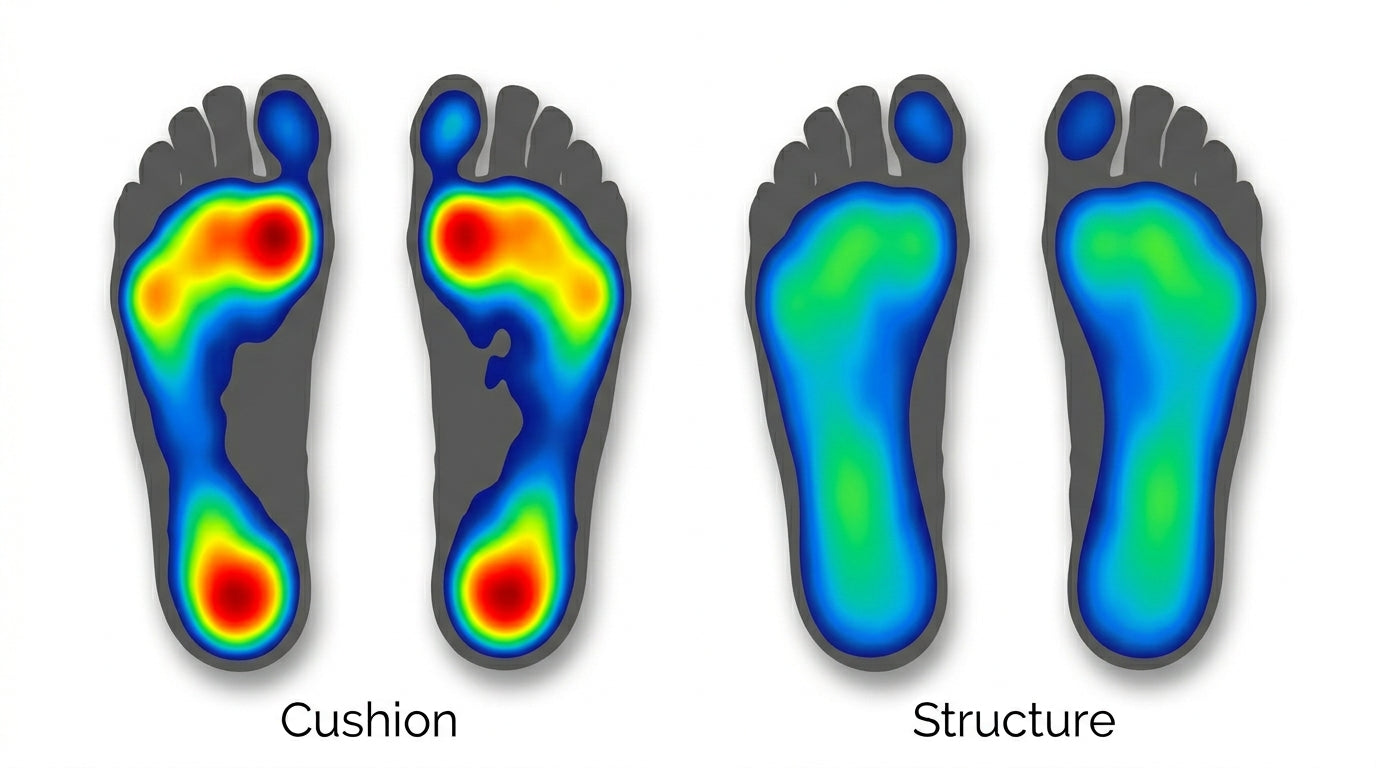
5The Longer You Wear Them, the More Your Feet Need Them
All four of the previous reasons combine into this one.
When the arch is held at a fixed position and stops cycling, the spring-mechanism muscles lose tone. When the foot is never challenged to bear load under its own control, the intrinsic muscles weaken. When cushioning masks the signal, the body has no feedback that anything is wrong. The insole becomes load-bearing infrastructure.
And then one day — a rest day, a barefoot beach walk, an impromptu hour in flat shoes — the infrastructure isn't there.
The arch meets the floor with less resilience than it had before. The intrinsic muscles, understimulated for months, can't provide the stabilization the body expects. What should be a manageable barefoot walk becomes genuinely uncomfortable, or produces a fatigue and soreness that seems out of proportion.
That disproportionate response is dependency. The foot has been supported past its own capacity for so long that it can no longer perform comfortably without the support it relies on.
This cycle, once established, tends to deepen. More insole time needed for the same activity level. More discomfort on the days without. The floor getting harder every month.
The five reasons above describe how most "supportive" insoles arrive at this outcome — not through malice, but through a fundamental design assumption: that static support is the same as beneficial support. It isn't.
What All 5 Reasons Have in Common
Read them again: a fixed arch position. Load-blind support timing. Passenger-mode feet. Masked rather than managed load. Dependency that deepens.
Every one of them is a downstream consequence of the same design choice:
The arch doesn't need to be replaced. It needs to be caught — at the threshold where it would otherwise collapse — and allowed to do everything above that threshold on its own.
That distinction is the difference between an insole that creates dependency and one that doesn't.
How Comfort Step Engineered Around All Five
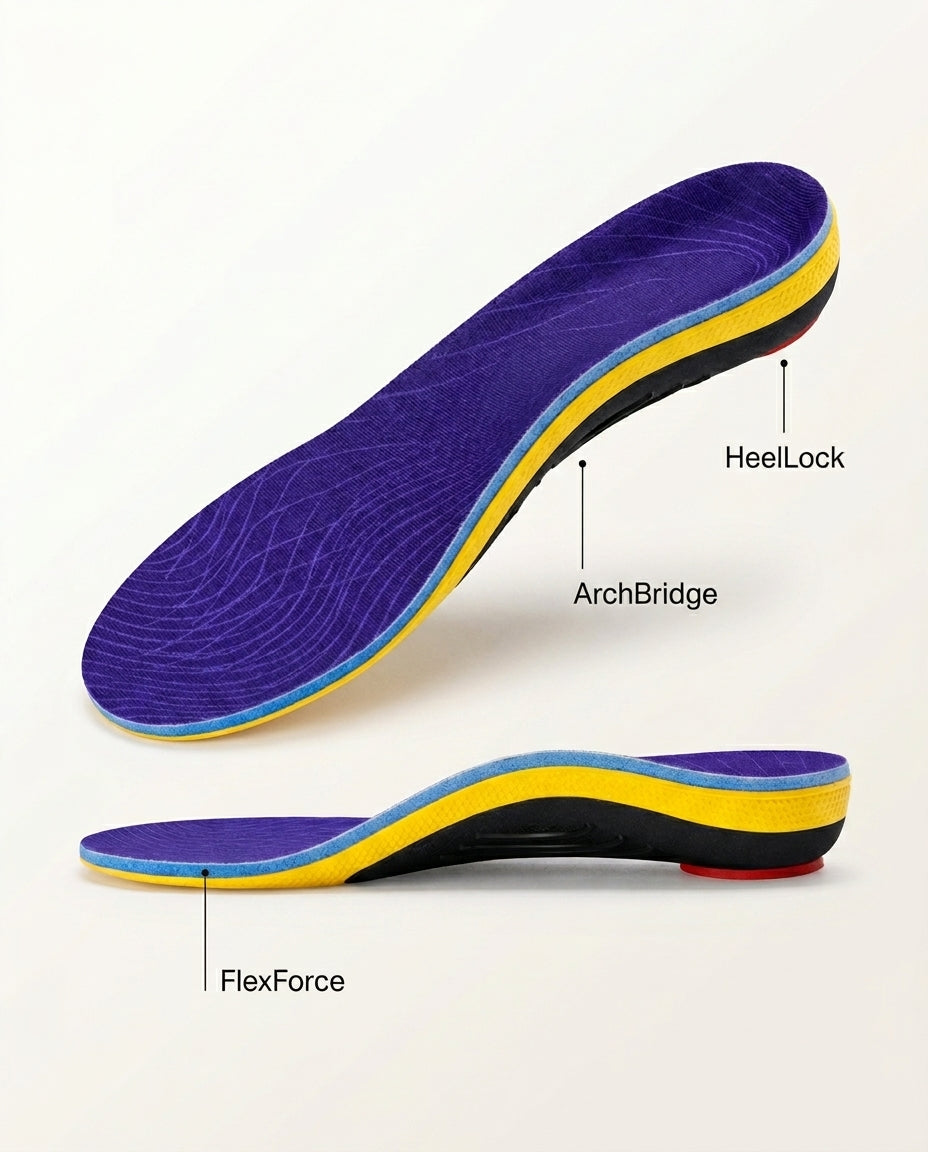
Comfort Step Pro Arch Insoles are built on a system called the TriAxis™ 3-Zone Alignment System — a three-zone insole architecture designed specifically to address the structural failures described above.
The core design principle of TriAxis™ is this: support the foot where it needs catching. Don't replace what it can do on its own.
Zone 2 — ArchBridge™ Support: The Key Distinction
The central innovation in the TriAxis™ system is what Comfort Step calls ArchBridge™ — the arch-support zone.
ArchBridge™ is not designed to hold the arch at a fixed height. It's designed to engage at the collapse threshold — the point at which the arch would normally flatten beyond its functional range and lose its spring capacity.
Below that threshold, the arch is free to cycle through its natural compress-and-rebound motion. The muscles that drive that cycle continue to receive load stimulus. The spring mechanism stays active.
At the threshold, ArchBridge™ props the spring instead of replacing it.
That single design difference is why users who wear Comfort Step on hard days and train barefoot on easy days report that both feel sustainable — not the progressive "getting harder to go without" pattern that rigid insoles produce.
Zone 1 — HeelLock™ Cradle
The deep heel cup at the back of the TriAxis™ system re-centers the heel bone to neutral and holds it from rolling inward. Inward heel roll (overpronation) is the primary driver of arch collapse — when the heel tips, the arch loses its base of support and flattens regardless of how strong the intrinsic muscles are.
HeelLock™ addresses this upstream, at the heel, before the arch is asked to absorb a misaligned load.
Zone 3 — FlexForce™ Forefoot Plate + DualCushion™ + AirFlow™
The forefoot zone of the TriAxis™ system addresses what cushioning alone fails to do: it distributes body weight evenly across the full ball of the foot, reducing the localized pressure at heel and metatarsal hot-spots that accelerates wear in typical foot mechanics.
DualCushion™ — a paired memory-foam and gel system beneath the load-bearing zones — delivers the sensory comfort associated with premium cushion insoles, but on top of real structural load management rather than instead of it. The result is the "walking on clouds" first-step feel without the tradeoff of masked mechanics.
AirFlow™ breathable, moisture-wicking top layer means the insole stays wearable all day — no heat buildup, no odor — so the structure stays on the foot long enough to actually do its job.
How TriAxis™ Addresses Each of the 5 Reasons
| The Problem | The TriAxis™ Answer |
|---|---|
| Too stiff — locks the arch down | ArchBridge™ engages at the collapse threshold only — natural cycling continues above that point |
| Built for standing, not moving | Three-zone geometry is built around the foot's actual load path, not a one-size average height |
| Props the arch up all day | The arch spring stays active — the foot does what it can do; ArchBridge™ covers only what it can't |
| Too soft — foot sinks in | FlexForce™ Forefoot Plate redistributes actual load; DualCushion™ adds comfort on top of real structure |
| The longer you wear them, the more you need them | The double-up approach (Comfort Step on hard days, barefoot/minimal on easy days) is validated by the design — both are sustainable |
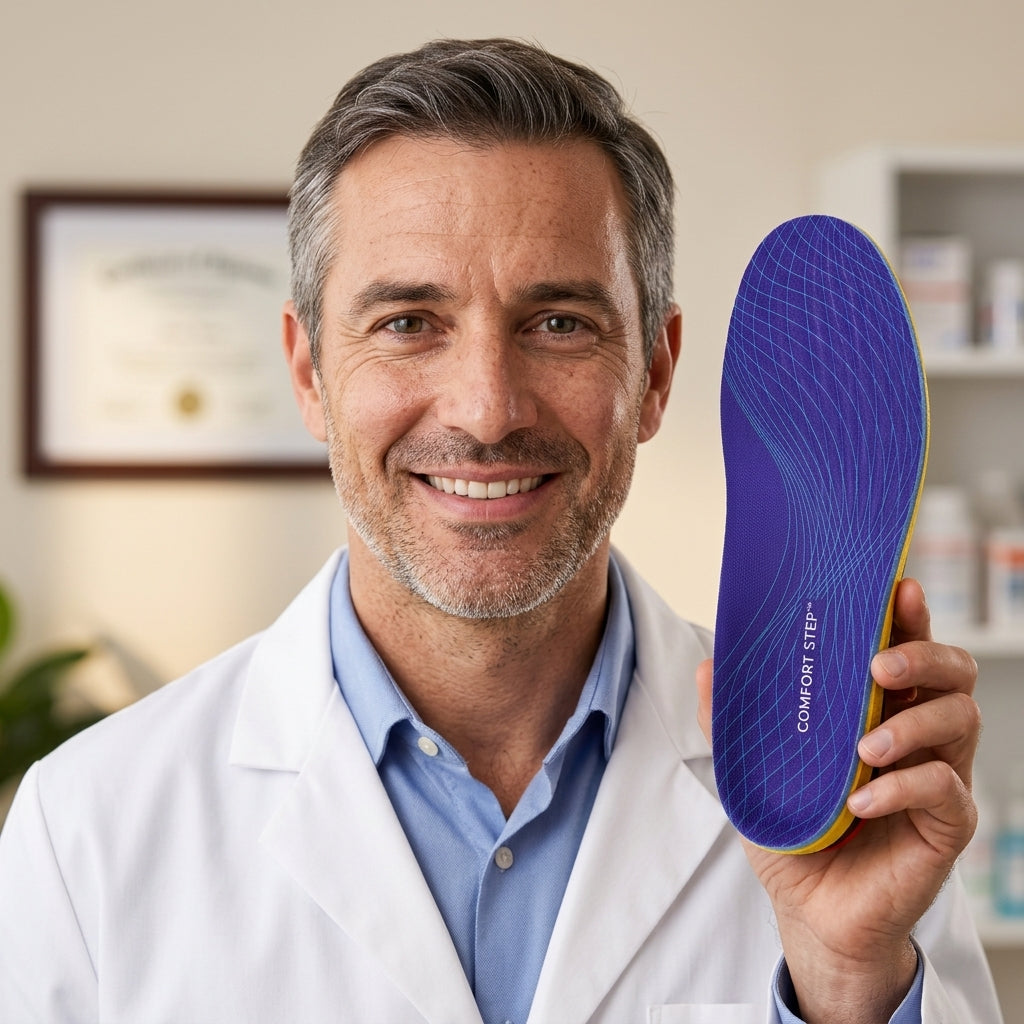
What Podiatrists Say About Dynamic vs. Static Support
The distinction between rigid, static arch support and dynamic threshold support isn't unique to Comfort Step's design language. It reflects a broader shift in how sports medicine and podiatry think about foot orthotic design.
Traditional orthotics — the custom-molded kind at $300–$600 — are typically prescribed for acute structural problems and fitted with the goal of eliminating painful motion. For a severe flat foot or a post-surgical recovery, that's appropriate. The foot needs immobilization.
For the much larger population of people with functional arch fatigue, overpronation, plantar fasciitis, and the everyday aching and instability that comes with long hours on your feet — rigid immobilization is arguably the wrong tool. What that population needs is support that catches the collapse without eliminating the movement.
The emerging consensus in sports podiatry is that arch support should be proportional to need — and that need is determined dynamically, under load, not statically, at rest.
TriAxis™ is a consumer expression of that principle: structural help where and when the foot needs it, without the passive-support dependency that full-time rigid orthotics tend to create.
What Comfort Step Users Report
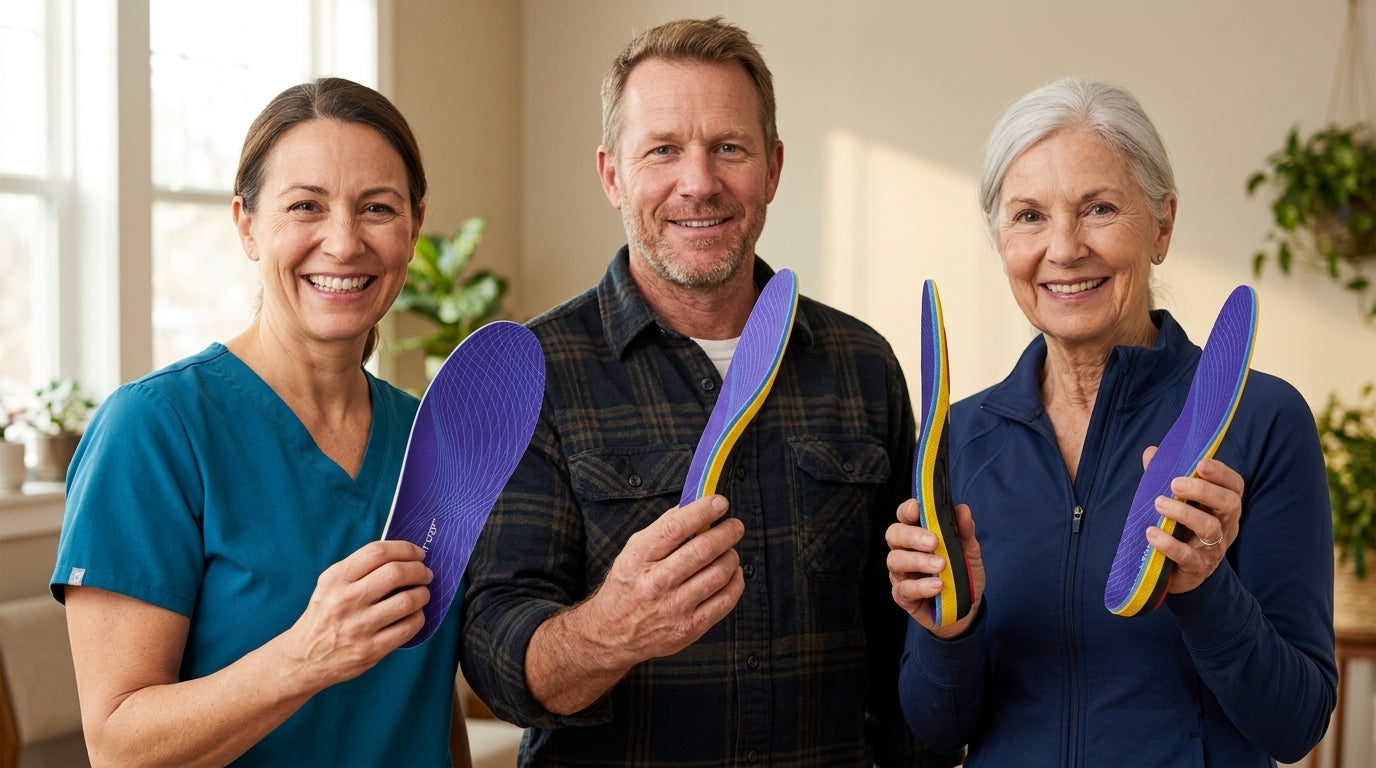
"I've been wearing orthotics for years and my feet keep getting weaker. Tried these because of how they described the arch support — not the usual 'we hold your arch rigid' approach. Six weeks in, I'm doing barefoot walks on my rest days and they actually feel manageable again. That hasn't happened in three years."— Denise K., verified buyer
"My feet were killing me by hour 6 of every shift. I tried every insole the pharmacy had. These are different — I notice it most on the day after a long shift, when I'm not wearing them. My feet don't feel like they need them to function. That's new."— Marcus T., verified buyer
"I was skeptical of the 'won't make your feet dependent' claim. But I've been wearing these on my work days and going barefoot at home, and my arch doesn't feel worse for it. My plantar fasciitis is the most manageable it's been in two years."— Sandra L., verified buyer
"First step out of bed used to feel like stepping on a nail. I'm six weeks in. Still not perfect, but it's a 2 out of 10 most mornings instead of an 8. And I can go a day without the insoles without everything falling apart."— James R., verified buyer
From Dreading Bare Floors to Trusting Your Own Feet Again

| Before | After (30 Days) |
|---|---|
| Feet feel worse every day you skip the insoles | Rest days without insoles feel manageable again |
| First step out of bed — reaching for something to grab | First step out of bed — just walking to the kitchen |
| Six hours into a shift, feet are screaming | End of shift fatigue feels proportional, not catastrophic |
| Barefoot on hard floors — genuinely uncomfortable | Barefoot around the house — normal |
| Growing suspicion the insoles are part of the problem | Clarity: support that works with your foot, not instead of it |
That's not a symptom table. That's the difference between feeling like your feet are getting away from you and feeling like they're yours again.
$99.90 → $49.95 — Comfort Step Pro Arch Insoles
Limited Stock at This Price
Every pair of Comfort Step Pro Arch Insoles includes the full TriAxis™ 3-Zone Alignment System — HeelLock™ Cradle, ArchBridge™ Support, FlexForce™ Forefoot Plate — plus DualCushion™ memory foam and gel comfort layer and AirFlow™ breathable moisture-wicking top.
Trim-to-fit. Fits sneakers, work shoes, boots, casual shoes. Unisex sizing.
Value this delivers:
- The arch-catching design that the five reasons above describe — not rigid lock, not passive cushion
- Validated for the double-up approach: Comfort Step on hard days, barefoot or minimal on easy days
- All-day breathable wear — no heat, no odor buildup
- Drop-in, no appointment, no $300–$600 custom orthotic pricing
1 Pair
2 Pairs · Most Popular / Best Value · ~$44.98/pair
Try Comfort Step Risk-Free for 30 Days
The 5 reasons in this article are worth testing, not just reading.
If you put Comfort Step Pro Arch Insoles in your shoes for 30 days and don't notice a difference in how your feet feel — on the days you wear them AND the days you don't — return them for a full refund.
That's the whole policy. No fine print, no conditions.
The Insole That Doesn't Commit the 5 Mistakes
You've read all five reasons. You can see the mechanism clearly.
That's not a design intent. That's a consequence of making support rigid when the foot is built to move.
Comfort Step's TriAxis™ system was designed around a different assumption: that the arch is a spring, not a shelf. That support should catch the collapse, not replace the movement. That the goal isn't a foot that can't function without the insole — it's a foot that functions better because it's supported where it needs it, and left to do its own work everywhere else.
The reader who finishes this article has two options:
Was this article helpful? The comment section is open — share what you've tried for arch support and whether the 5-reasons framework matches your experience.